


Can we ever create something wiser than ourselves?
Technologies in artificial intelligence (AI) and robotics are accelerating, and are now beginning to augment our mental and physical capacities. This is possible primarily because humans have understood mathematics and physics—logic, mechanics, and other disciplines. We now use these sciences to manipulate and control matter and energy at an unprecedented level.
But if humanity is to truly flourish, we need wisdom as a counterbalance. Unfortunately, wisdom in these times is lacking, forgotten, gestured, misunderstood, dogmatised.
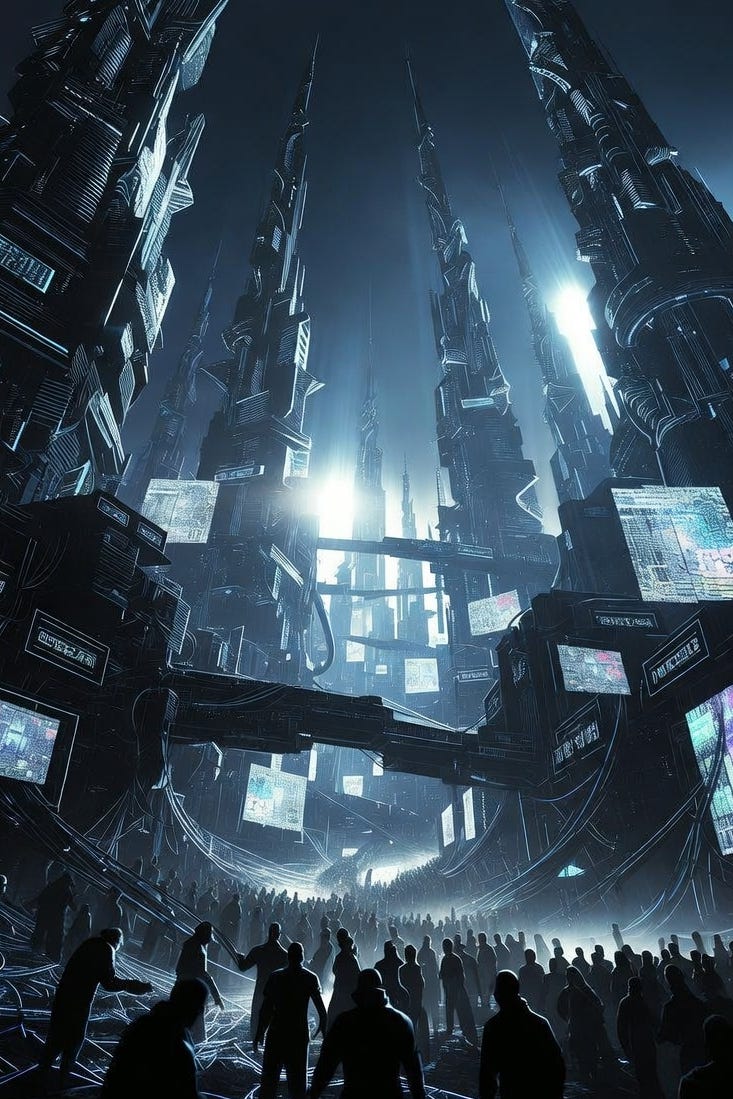
A high-tech society without wisdom is a nightmare. With wisdom, paradise becomes possible. That is why wisdom is now more important than ever before.
But wisdom is a process of reflection. It takes patience, sacrifice, and deepening honesty to build self-awareness and broad pragmatic understanding. Its result: the reduction of problems born of foolishness, stupidity, and hate. It begins with each individual, and only then expands to the collective.
It can be painful to truly face reality. But once a foundational honesty is solid, its gifts endure. Only a society built upon wisdom can survive the vicissitudes of nature, can endure the ages, can birth themselves into a space-faring civilisation. Lacking wisdom, we will perpetually sink into the quagmire of history, for archaeologists of the future to study and puzzle over.
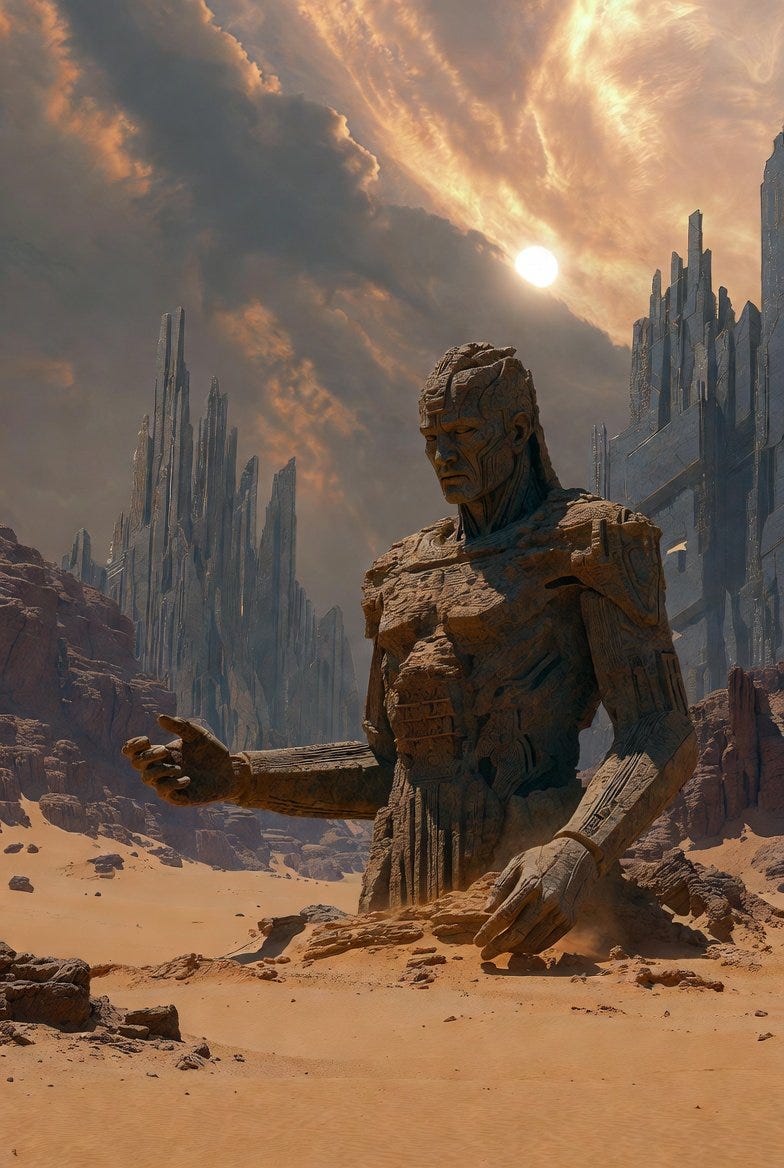
Many cultures have endured millennia because of their wisdom, but none had the technology the world has today. As technology accelerates, the potential for large scale, hard-to-reverse problems increases.
We saw this with the invention of the atom bomb. Einstein’s famous equation E=mc² contributed to the underlying physics for this weapon. In 1939, as World War II was expanding across Europe, Einstein wrote to President Franklin D. Roosevelt urging the United States to develop nuclear technology before Germany. After the United States dropped two atomic bombs on Japan, Einstein deeply regretted sending the letter to Roosevelt. He spent the rest of his life advocating for nuclear disarmament and international controls.
J. Robert Oppenheimer was the scientific director of the Manhattan Project, which built these weapons. After the Trinity test (the first atomic detonation, in the Jornada del Muerto desert, New Mexico) on 16 July 1945, Oppenheimer is said to have recalled a line from the Bhagavad Gita, “Now I am become Death, the destroyer of worlds.”1 That Oppenheimer leaned upon ancient literature as a response says something about the timeless role wisdom plays in our society. It seems human nature to return to sources of wisdom during difficult and devastating times.
The atomic age was several generations ago. But do you notice anything similar with the current global race for AI?
Elon Musk has warned against the dangers of AI since at least 2014, and has repeatedly said it is more dangerous than nuclear weapons. He developed the company xAI to build a primary truth-seeking AI model, with the aim to understand the truth of the universe, and to counter risks from profit-driven pursuits, recklessness, training bias, political correctness, and developmental opacity.
This is not to say AI doesn’t have beneficial uses—it certainly does. But we cannot afford to be blind to its dangers. We need to apply it wisely.
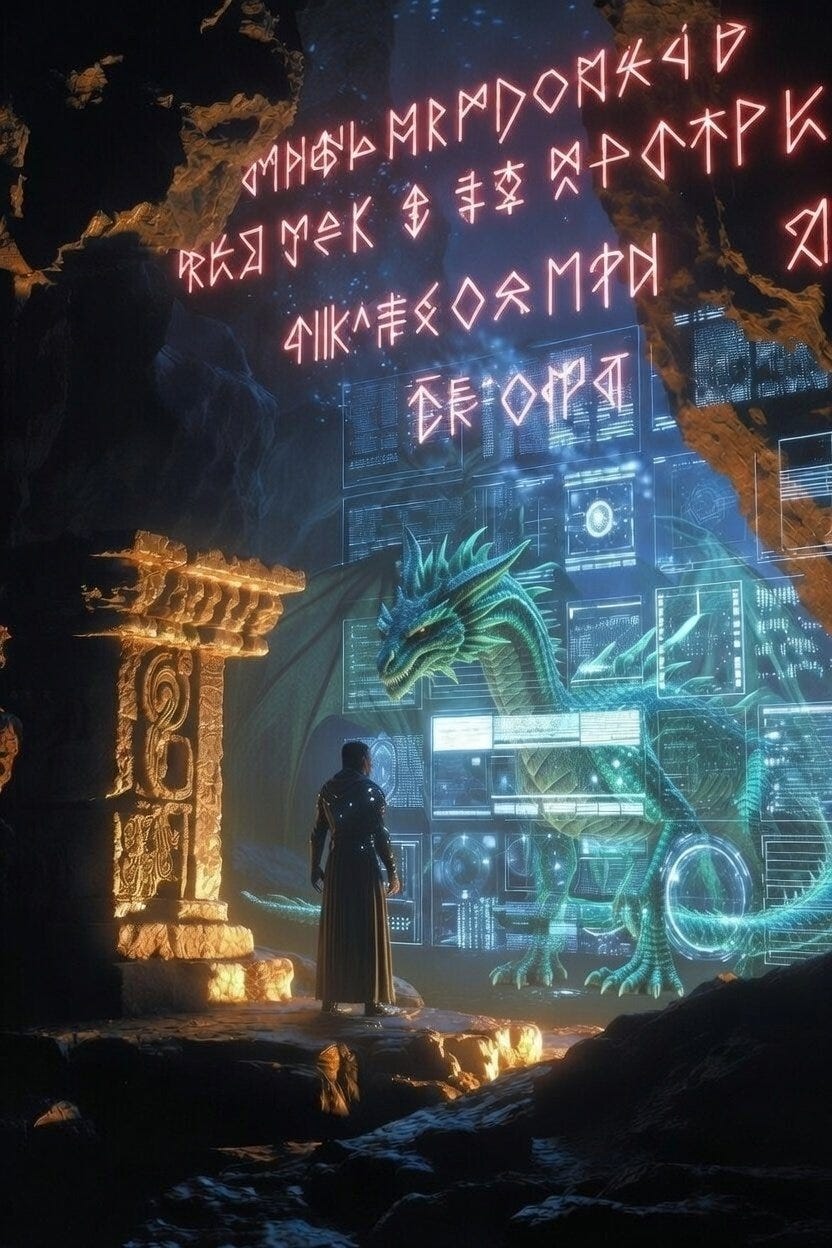
Technological progress will most certainly continue to accelerate and expand in scale, both in the world at large but also deeper into our own humanity (via AI, humanoid robots, cyber-neural augmentation, etc.). This is why wisdom is so important—both for individuals and for our culture. A culture of wisdom provides the buffer against our own individual and collective folly. A wise society has stability, depth, long-term intelligence and broad-minded consideration.
Only a wise society can endure extreme technological power. If we want to solve our problems on Earth and become a space-faring civilisation, we must reawaken the innate wisdom at the centre of our humanity. This wisdom is not dogma or ideology. It is natural and unique to each individual. It is deeply encoded from our ancestors as a living, thoughtful, open response to life. And it is timeless, as seen in the patterns of nature. Its essence is self-awareness.
With wisdom, technology can be applied beneficially.
If this topic interests you, you may also be interested in Northern Wisdom, our personal transformation app for cultivating wisdom and self-mastery—currently being built. To receive updates, free early access, and a special founding member discount, join the waitlist.

Disclaimer: Wizardry Sphere content and tools support the personal practice of developing wisdom and self-mastery through reflection and philosophical exploration. They are educational and inspirational in nature. Individual results vary and no specific outcomes are guaranteed. This material is not a substitute for professional advice.
www.wizardrysphere.com | Terms and conditions | Privacy policy
Copyright © 2026 Genius Authoring Pty Ltd trading as Wizardry Sphere | ABN 85 669 120 978
Oppenheimer’s quote differs from the original. The Bhagavad Gita 11.32 has “kālo ’smi loka-kṣaya-kṛt pravṛddho” (“I am time, the great world-destroyer.”) This has quite a different meaning in the context of the Manhattan Project.